Friday, 16 December 2011

Idioms- Figurative language

One of the most important combinations between language and food are the idioms, because by means of food we transmit some realities and ideas about life, so I was looking for the most relevant idioms and now I’ll try to explain you some of them, in order to be prepared to understand their real meaning and to avoid big confusions.

-butter up


Meaning: flatter someone to try to get their favour or friendship;

-carrot and stick


Meaning: promising to reward or punish someone at the same time;

-couch and potato:

MEANING: a very lazy person;

-eat one’s cake and have it too

MEANING: use or spend something and still keep it;

-finger in the pie

MEANING: participate in something that is happening;

-hard nut to crack

MEANING: something or someone difficult to understand or do;

-have egg on one’s face

MEANING: be embarrassed;

-in a nutshell

MEANING: briefly, in a few words;

-spill the beans

MEANING: tell a secret to someone who is not supposed to know about it;

-take with a grain of salt

MEANING: accept or believe only part of something;

-polish the apple

MEANING: flatter someone;

-out to lunch

MEANING: crazy, mad.

Interesting information about avocados

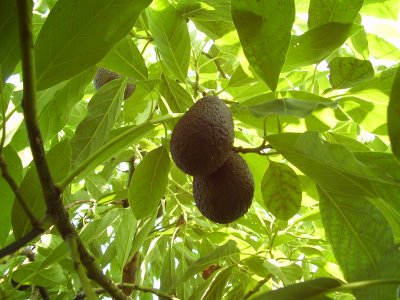
The avocados come from trees that are called:"Persea Americana" which are from Mexico.
Perse Americana's fruit is the avocado,also it is called alligator pear.


But which is the etymology of the word: "avocado"?

The word "avocado" comes from the Spanish term: "aguacate" which in turns comes from the Nahuatl word "ahuácatl".

"ahuácatl" means testicle and it refers to the shape of the fruit. Avocados were fruits considered by Aztecs as a fertility fruit.

So, the English term "avocado" comes from the Spanish one "aguacate".

But, returning to Aztec's ideas, I have to explain a little more about this theme. Nowadays, the avocado is considered aphrodisiac fruit! Just by looking at the shape of avocado, you will see the reason why it is associated with sexuality. Aztects as I have just mention, believed that the fruit hanging in pairs on the trees resembled testicles.


However, Catholic priests in Spanish found this fruit so obscenely sexual that they forbade it.
There is an expression in Spanish that is: "Encontrar a tu media naranja".

However, this expression can be considered ambiguous, at least, for non-native Spanish. Why? Because they can interpreted in two different ways, which are show through those pictures:


It means that for one person who does not understand what this expression really means in a literary way for a Spanish speaker, "encontrar tu media naranja" can produce different kind of confusion !!

Nevertheless, "Encontrar a tu media naranja" can be translated into English like " to find the perfect match"


But, where does this expression come from? This amorous expression comes from a myth that is narrated by the Greek poet Aristophanes in the Plato's work titled: "the banquet".

In this myth, the human being was almost perfect, the manhood was like oranges, rounds with two faces one in front to another in the same head, four arms and four legs. Limbs were used to move rolling.

One of them dared to face to gods, because he thought that he was like the gods. So, Zeus punished to every human being to be cut into two.

For that reason, the human beings were so serious and sad looking for their other part. However, there was the possibility of finding the another part of your body and if someone found it, he had to embrace his second part until his death, because this human being was complete.


Thursday, 15 December 2011

Did you know....??? (2)

* 2nd section: BEEF

- American cuts of beef

File:US Beef cuts.svg


Beef are split along the axis of symmetry into "halves", then across into front and back "quarters" . Canada uses identical cut names as the U.S. system, except the part designated as "round" is known as "hip" in the Canadian system.


- British cuts of beef

File:British Beef Cuts.svg


- Dutch cuts of beef

File:Dutch Beef cuts.png

Wednesday, 14 December 2011

Did you know....???

Did you know that there are different ways to cut meat? It depends on your nationality !! so, let's go to contemplate some of the most famous cuts of meat. The following pictures help us to identify the differences in the cuts!


* 1st section: PORK


- British pork of cuts

File:British Pork Cuts.svg

- American pork of cuts

File:American Pork Cuts.svg


· Head: It is used to make soups, stocks and brawn; the ears can be fried/ baked and eaten separately.

· Spare rib roast: It is a subdivision that british does. It is found in the blade shoulder of the porks (upper part of the shoulder). Although, British do this distinction in blade part towards Americans both parts are the same.
Normally, blade part is boned out in order to be roasted.

· Hand, Arm shoulder or even Arm picnic: They are used in both countries to be cured on the bone to make a ham like product or to make sausages.

· Loin: It is the pork part used to make back-bacon also called: Canadian style bacon. Also, we can use this part to make pork chops, because "loin" can be subdivided into three parts depending on the ribs of the animal.

· Belly or side and spare rib: It is the fattest meat, however, it is used to steaks.

· Leg or ham: They are probably, the most famous part of the pork ! (almost in Spain) as the case of Hand or Arm shoulder it may be cured.

· Hock: It is a term in common for both countries, however, British do a distinction between hocks and trotters. In any case, hocks and trotters can be eaten like the tail.


Do you find this article interesting? If the answer is YES, you should not miss the next post in which I will write about beef cuts!.

Monday, 12 December 2011

The real meaning of the word "food"

Probably, you will never imagine what food means for each person in the world...why? Because, the simple word: "food" can imply several different meanings.


What do you think that the word: "food" means for those persons who lived in dark orange color in the next map:


Nowadays, the poorest countries are:

- In America: Nicaragua and Guyana
- In Africa: Zimbabwe, Congo and Liberia
- In Asia: Afghanistan, Gaza strip and Cisjordania
- In Europe: Kosovo, Moldavia and Montenegro
- In Oceania: Tokelau, Tuvalu and Solomon Island.

For them, the word "food" does not matter if it is written in English or whatever of their languages likes for example: "comida", "chakula","ushqim" or "غذاء".

I am totally sure that for them "food" means: do not die.


However, now, you can look at this map and my question is: How do you think that population of dark green color consider the word "food" as the another ones? I do not think so.


Population of developed countries does not appreciate what they have, because they can eat whatever and whenever they desire.


But, how far can become the pleasure of eating? Well, food can even be considered art and passion! I will show you some examples


Clearly, there is a great step between the both points of view, It will depend on where you were born.


I hope that at least, when you look at food you think in those people who even cannot every day.
And remember: Everybody needs somebody to help them out, and you know that you could be that someone.